Showing posts with label Adaptation Film Reviews. Show all posts

Thursday, 7 May 2015

CG Artist Toolkit: Maya Tutorials & Film Reviews Submission Post

Pipeline 2: Games Modelling


Pipeline 2: Normal & Occ Maps


Pipeline 2: Diffuse Maps & Viewport 2.0

Dynamics 1: Intro to Particle Dynamics

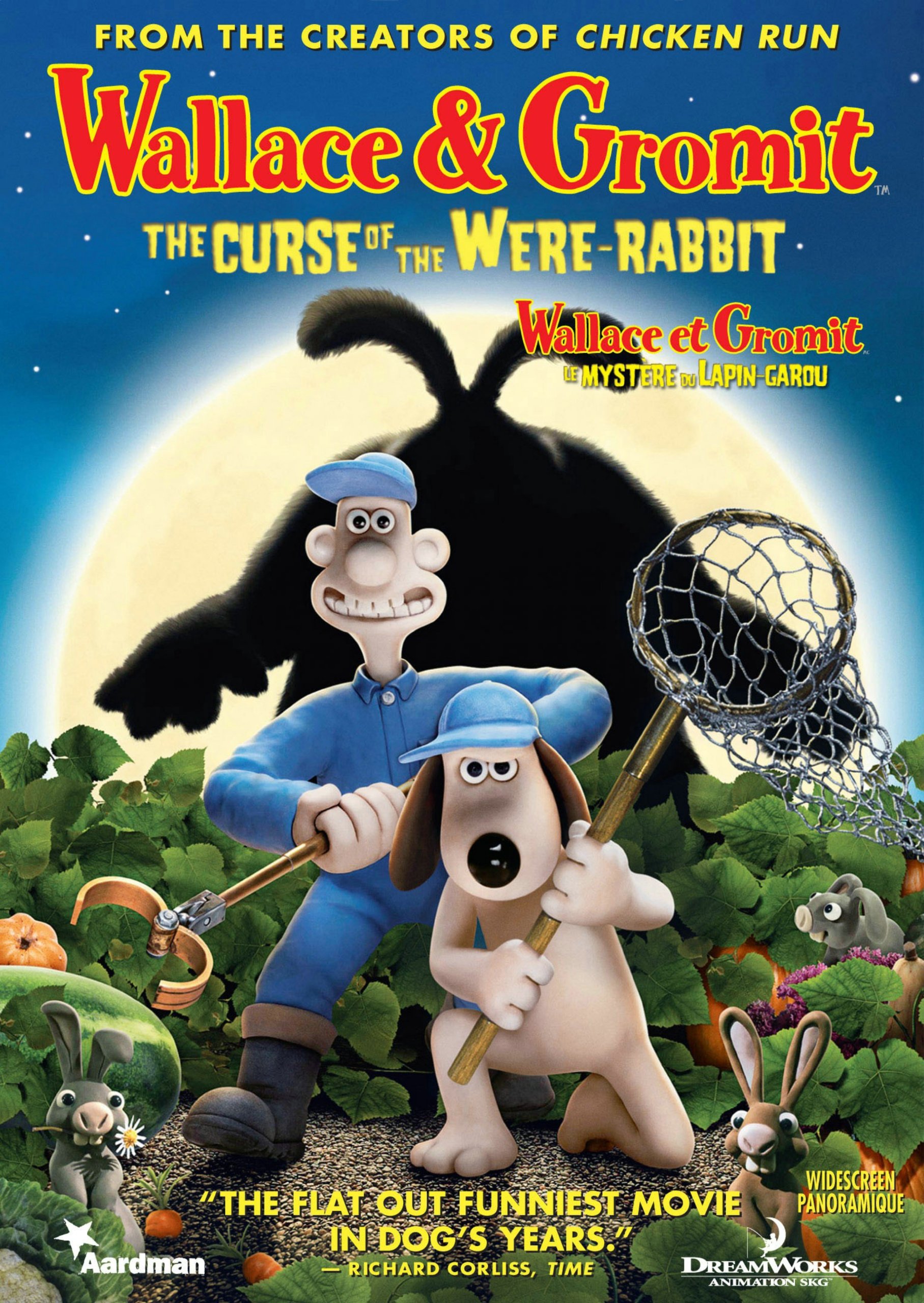
Adaptation Film Programme: Wallace and Gromit- The Curse of The Were Rabbit (2005)

Figure 1: Movie Poster [Still Image]
Wallace and Gromit- The Curse of The Were Rabbit (2005) is a British stop-motion animated comedy film directed by Nick Park and Steve Box. It was a successful film as it bagged several prestigious awards including, to name a few,  Best Animated Feature Film at the 78th Academy Awards, Best British Film at the 59th British Academy Film Awards and also Best Comedy Film at the British Comedy Awards.

Wallace and Gromit- The Curse of The Were Rabbit (2005) follows quirky inventor named Wallace and his mute but smart dog, Gromit, who owns a small pest control business. Their mission is to find the mutant rabbit that seemed to be sabotaging the villagers' plantation of vegetables of which they were entering for, in an annual vegetable competition.

It is a light hearted film filled with British humour which made it a joy to watch. Additionally, the use of stop motion made it more stylized and visually captivating. The quality the stop motion produced from this film made it a film to remember as it has a certain charm ingrained in it. This is also one of many reasons why this film was a success. A film for all ages because of its entertaining visuals and comedic entity that comes with it and definitely recommended.


List of Illustration: 
Wallace and Gromit- The Curse of The Were Rabbit (2005) [Poster] at http://www.dvdsreleasedates.com/covers/wallace-and-gromit-the-curse-of-the-were-rabbit-dvd-cover-24.jpg (Accessed on 7 May 2015)

Adaptation Film Programme: When the Wind Blows (1986)

Figure 1: Movie Poster [Still Image]
When the Wind Blows (1986) is animated film directed by Jimmy T. Murakami based on a graphic novel written by Raymond Briggs of the same title. The film was nominated for Best film in International Fantasy Film Award. Apart from this animated short, Murakami was also known for his other brilliant short, The Snowman (1982). 

When the Wind Blows (1986) revolves an elderly couple who were living in a countryside when they were hit by the nuclear bomb from the Soviets. Prior to the attack, they were handed a pamphlet by the government to prepare themselves of which they followed very much closely. However, they were deceived because despite following the instructions, they were left with nothing.

It is an animated short that uses a combination of both 2D drawings with a 3D set.  The film effort to make it visually interesting was a commendable effort but in terms of the narrative and the genre the film was categorised which was comedy is something I disagree. Yes, there were bits of humour in it but as a whole, it was depressing. I do not recommend this film unless you are in for some emotional film to watch.


List of Illustration: 
When the Wind Blows (1986) [Poster] at http://s24.postimg.org/njwc0o9id/when_the_wind_blows_original.jpg (Accessed on 5 May 2015)

Monday, 9 March 2015

Adaptation Film Programme: Belleville Rendezvous (2003)

Figure 1: Movie Poster [Still Image]
Belleville Rendezvous (2003) is animated comedy film written and directed by Sylvain Chomet. The film is Chomet's first feature film and was an international co-production among companies in France, the United Kingdom, Belgium, and Canada. Awards that this film has managed to clinch includes Best Film Music at the César and BBC Four World Cinema. Additionally, since it was co produced in Canada, it won the Genie award for Best Motion Picture. Chomet's work can be recognised easily and what set his works apart from others is his distinctive, exaggerated designs of his characters. He also incorporates the French culture in his work which includes the distinguishable European streets and the annual event called Tour de France where cyclist from all over the country participate in this bicycle race.

Belleville Rendezvous (2003) revolves around the lives of Madame Souza and her orphaned Grandson whom she has been training to be a world beating cyclist. During the mountain stage of the Tour de France, her Grandson was kidnapped by people from the French mafia and was brought to the city of Belleville. Madame Souza and her pet dog, Bruno, teamed up with the Belleville Sisters, a song-and-dance trio seeking for assistance in a rescue mission to save her Grandson.

It is visually interesting animation. The characters have been designed to portray how Chomet sees the people of France and Belleville are like and since it has been highly stylized, these characters looks like caricatures. Despite having no concrete script, the complexity of the visuals helps to propel the story forward which makes it understandable and readable to the audience. Hence, making it a successful piece of work. All in all, this animation can easily be enjoyed. For those who would love to see how a piece of work can still turn out to be a success with interesting visuals, I definitely recommend this. Additionally, there are interesting subtexts to this film which can be read if it has been watched closely.


List of Illustration: 
 Belleville Rendezvous (2003) [Poster] at http://cineclubejoane.org/2014-07/images/Belleville.jpg (Accessed on 9 March 2015)

Sunday, 1 March 2015

Adaptation Film Programme: Persepolis (2007)

Figure 1: Movie Poster  [Still Image]
Persepolis (2007) is a co-written and co-directed piece of work by Vincent Paronnaud and Marjane Satrapi. Paronmaud is a French comics artist and filmmaker whereas Satrapi is a graphic novelist, illustrator and film director. It is successful piece of work as it has been internationally recognised and has also received various awards. In the 33rd César Awards, this animation clinched a couple of awards which includes Best First Work (Vincent Paronnaud and Marjane Satrapi) and Best Writing – Adaptation (Vincent Paronnaud and Marjane Satrapi). Other awards include Best Foreign Language Film won at São Paulo International Film Festival and Rogers People's Choice Award for Most Popular International Film at Vancouver International Film Festival.

Persepolis (2007) is a French-Iranian-American animated film based on Marjane Satrapi's autobiographical graphic novel of the same name. It is about the life of Satrapi as she experiences the Islamic Revolution in Iran. Because of her outspoken personality and always questioning the authorities, Satrapi's parents sends her away to Vienna as they feared of her safety. It is a struggle of a young girl trying to find her place in this world as western culture changed her and not fitting right back in, in her own homeland. 

It was an eye opening animation as it showed how a young girl viewed the revolution and how her childhood is filled with sadness, destruction and witnessing death of thousands of innocent people. In my opinion, this film has managed to be the voice to those Iranians who had to witness the revolution and was not able to tell the world about it. What the media has portrayed about this revolution and the actual truth varies broadly hence, this film gave another perspective to the situation. In terms of the art the direction, the use of black and white and the simple line drawings has worked very effectively in terms of conveying the essence of the film which is what it is like to be going through the revolution and struggle of finding one's identity.


List of Illustration: 
Persepolis (2007) [Poster] at http://www.flickeringmyth.com/wp-content/uploads/2015/02/7279175.3.jpg (Accessed on 1 March 2015)

Adaptation Film Programme: Waltz With Bashir (2008)

Figure 1: Movie Poster  [Still Image]
Waltz with Bashir (2008) is an animated feature-length film produced in Israel after four decades by 
Ari Folman. This film was a success as it clinched several prestigious awards which includes Best Foreign Language Film at the Golden Globe Awards and Best Foreign Film at the César Awards. This film has also been officially banned in Lebanon.

Waltz with Bashir (2008) is a documentary animation narrated and directed by Israeli war veteran, Ari Folman. It is a piece of work where Folman tries to have a recollection of what happened in the invasion of Lebanon in 1982 that he was involved in. In order to do that, he carried out an interview with fellow veterans.

It was an interesting documentary as it gives a great depth to the different perspective of what happened during that time by different people. In terms of the art the direction, graphic novels has a huge influence with it. The strategic use of limited colours to convey the animation and its animation was also a contributing factor to the success of this film. Additionally, live footage that has been incorporated at the end of the animation puts everything into perspective and made it clear the true destruction that the war had caused to Lebanon. Overall, it was an animation that was both visually and emotionally captivating and it gives you a little bit of insight of the true event. An animation that's worth a watch.


List of Illustration: 

Figure 1 Waltz with Bashir (2008) [Poster] at http://i1.wp.com/www.sinematopya.com/wp-content/uploads/2013/08/waltz_with_bashir_ver2.jpg?resize=535%2C401 (Accessed on 1 March 2015)

Tuesday, 17 February 2015

Adaptation Film Programme: Sita Sings The Blues (2008)

Figure 1: Movie Poster  [Still Image]

Sita Sings the Blues (2008) was an independent project written, directed, produced and animated by American cartoonist, Nina Paley. It took about 5 years to produce this film as it was Paley’s first feature film. This animated film was a success as it clinched several prestigious awards which includes Best Animated Feature at Ottawa International Animation Festival and Jury’s Special Prize at Festival MONSTRA. This film was released for free to download in early March 2009.

Sita Sings the Blues (2008) was divided into having two plots where one was an adaptation of Sanskrit epic poem called the Ramayana. The prince (Rama) was exiled from the kingdom by his father for 14 years. Sita, a devoted wife of Rama, was determined to accompany her husband into the woods despite knowing the dangers that lies ahead. The second plot was based upon Paley’s life, a contemporary parallel to the film. Her husband was offered a 6 months contract in India of which he accepted. The latter plot was the American version of the story of Rama and Sita.

Three friends who discusses about the story of Prince Rama and Sita narrated the film and as it was a tale passed on from one generation to the next, the details the narrators knew about it varied. Additionally, since the setting was in India, the film has followed Bollywood’s style of directing with songs and intermission included in them. In terms of art direction, this film uses multiple styles, which captures the audience attention at every scene. Specks of humor from the narrators contribute to the joy in watching this film. Overall, I do recommend this film as culture, romance and stylistic piece of work make up this film.

List of Illustration: 

Figure 1 Sita Sings The Blues (2008) [Poster] at http://ecx.images-amazon.com/images/I/81eAhRldMCL._SL1500_.jpg (Accessed on 17 February 2015)

Friday, 23 January 2015

Adaptation Film Programme: Paprika (2006)

Figure 1: Movie Poster  [Still Image]
Paprika (2006) is a Japanese animation directed and co-written by Satoshi Kon. It was based on a novel written by Yasutaka Tsutsui in 1993, with the same name. Satoshi Kon was a Japanese director and a graduate from Musashino Art University. He started off as a Manga artist and went to be a director. In his short career, Kon has also made other award winning animation that includes Pafekuto Buru (1997) and Sennen joyû (2001). For Paprika, he has bagged several awards that includes Feature Film Award from Newport Beach film Festival and Public’s Choice Award from Montréal Festival of New Cinema. The success of Paprika came to the west and Christopher Nolan’s Inception (2010) was Hollywood’s version of this animation.

Paprika (2006) is an animation set in the near future where a team of therapists from the Foundation for Psychiatric Research developed a device called the D.C Mini. This device has the capability of recording and watching the dreams of the patients they were treating. However, when one member of the team betrayed the research, he had the control over everyone else’s dream. This creates a havoc as dreams bleeds into reality and making the line between the conscious and subconscious to be a blur.

At the start of the anime, it was confusing because you did not know if that was reality or dream. But as the film moves along, you will be able to distinguish between the two worlds with the existence of Paprika. The very stylistic animation was created using a popular Japanese animation technique called Limited Animation. It is a cost effective technique where parts of a frame are redrawn and the rest are recycled and modified to suit whatever is needed to be in motion. Because of this, the creative team behind Paprika had room for experimentation to do all the bizarre, warping effect and making the amazing morphing animation and dreamy visuals. Additionally, the vibrant colours in the film made it visually captivating to watch. If you love science, technology and understands the Japanese culture and art, Paprika is the film to watch as it brings the three elements together.


List of Illustration:

Figure 1 Paprika(2006) [Poster] at http://seller.be/Blu/Images/145.jpg (Accessed on 23 January 2015)

Thursday, 15 January 2015

Adaptation Film Programme: Mary and Max (2009)

Figure 1: Movie Poster  [Still Image]
Mary and Max (2009) is an Australian claymation which was written and directed by Adam Elliot and produced by Melanie Coombs. The Australian born director based in Melbourne, is well known for his love for clayographies (Clay animated biographies) and his traditional ‘in-camera’ technique. Mary and Max is one of his many successful piece of work. This claymation won a few prestigous awards. This includes Best Animated Feature Film at the Asia Pacific Screen Award (2009) and the Grand Prize at the Ottawa International Animation Festival (2009). In all of Elliot’s works, there are bits and pieces of the happenings in the society at the point of time the claymation was made that he had included. In this case, it was how the idea of certain people from the society was conceived. Additionally, the authenticity of the materials to make the animation remains intact because the methodology that he follow is of the French auteur. This means that he refuses to digitally edit them by adding any computer generated imagery to them. To make his animation possible, he has recruited a very large number of animators and modelmakers to personally have his ideas handcrafted.  Because of this, each film takes a few years to be completed.

Mary and Max is about two unlikely people from opposite ends of the globe who became pen pals. It all started when a curious 8 year old Australian girl named Mary Daisy Dinkle wanting to find about more about Americans. One day, at a post office, she randomly picks Max Jerry Horowitz’s name from the phone book and decided to write him a letter, introducing herself and hopes for a reply from the American. She was delighted when the 44 year old obese, Jewish atheist replied. It was then that the start of a great friendship. Additionally, they were able to relate to each other because of their common struggles which includes bullying. Max offered advices to solve the problems that she was facing because he had been through them before.

I think that the film is trying make the society aware that problems like alcohol abuse and bullying, to name a few, will affect an individual mentally if no proper action is taken against the person doing it to them. In this case, what each character suffers from/ experienced was brought forward to their adulthood. This shows that those scars are etched in their memory and sometimes it is hard to get over it. This indeed is a strong message about what bullying can do to an individual. I believe that the film has successfully put the message across. In terms the art direction, it is indeed a stylized animation as the character are designed to be quite chunky and that the colours used are mainly brown and grey but occasional specks of red, which was used appropriately to depict love in some scenes. With that said, however, there were some scenes or dialogues that I find inappropriate for a film that has been rated PG 13 by the Motion Picture Association of America. This did affect me while watching it because I would laughed it off but an interpretation from a younger audience would be different and this film is for audiences from all age groups. All in all, I would recommend this film because despite several parts of the film that I find inappropriate, the bigger message of it was that how society acts towards an individual will affect and destroy them in some ways and it is an issue that has to be addressed. Also, the start of beautiful friendship can be as unexpected as that of Mary and Max. 


List of Illustration:

Figure 1 Mary and Max (2009) [Poster] at http://digitalnews.ua.edu/wp-content/uploads/2014/03/mary-and-max-22895-hd-wallpapers.jpg (Accessed on 15 January 2015)